

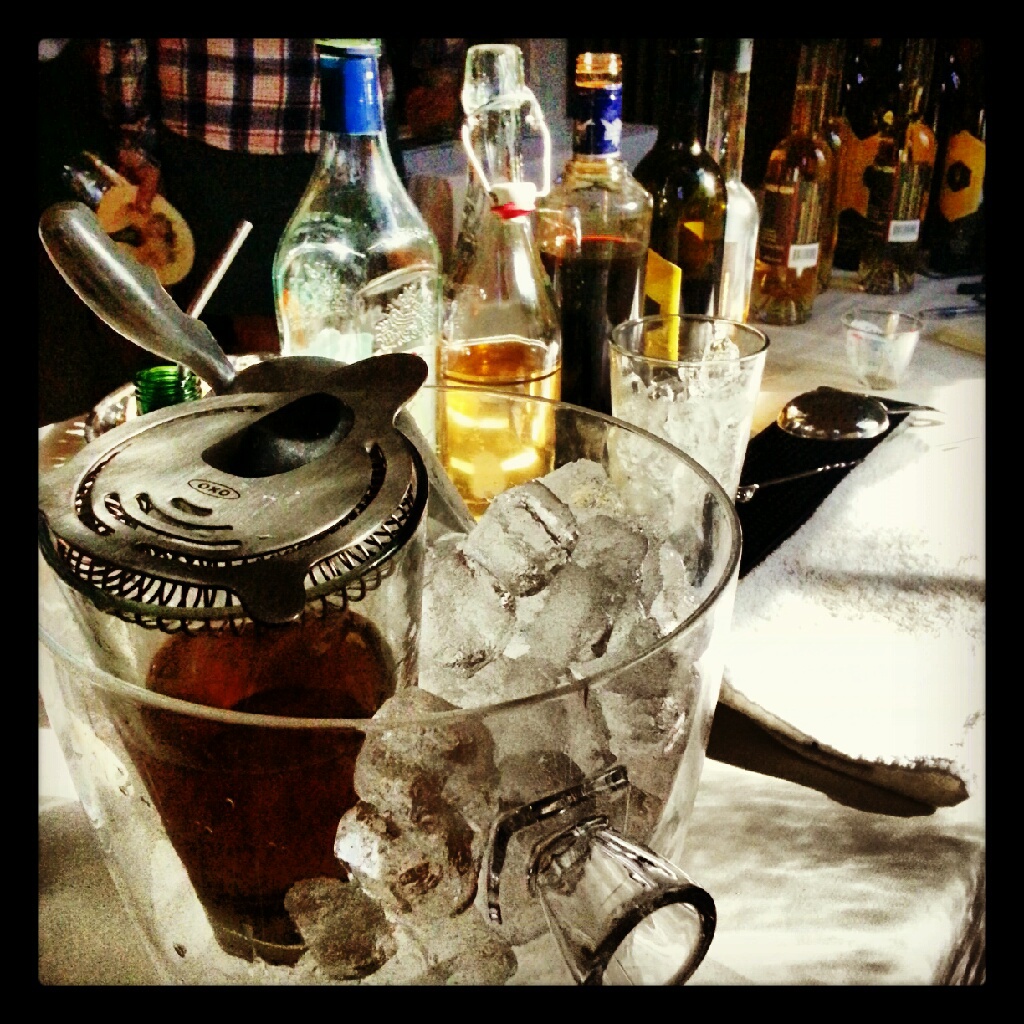
Behind the Bar (photo: Janice Mansfield)
By Megan Cole
How does that saying go? “Necessity is the mother of invention”? In small towns, far from fancy food boutiques and Whole Foods, foodies have had to find a way to make due with what they have. Cookbooks, cooking programs and travel have dangled the carrot of foods and beverages never before tasted, but what happens when you get home, or when you want to try making that pate or bitters that you tried in that awesome pub in Portland, Seattle, Chicago, Vancouver, etc.? Or saw in a cookbook?
We go DIY. But somewhere in the midst of trying to recreate what a chef in a kitchen made, we go rogue and impart our own flavours and tastes to create something completely different.
The other part of necessity, that goes along with the creativity and passion for food, and that inspires the DIY food scene, is thriftiness. We all love going to the bar and sipping on fancy cocktails made with premium liquors and house-made syrups and bitters, but when we look at the bill, we realize maybe we could do the same thing at home.
Janice Mansfield, Victoria, BC food and cocktail lover, holds another title: cocktail hacker. Mansfield use to spend her days in government offices, but after leaving government she began diving in to “food and other tasty-related things.”
“I had this idea to do something in food whether it was growing or preparing it,” she says. “The pieces just fell together for the latter a little more naturally than they did for the former.”
In addition to creating beautiful, gluten-free desserts for coffee shops and wholesale in Victoria, Mansfield has also been creating bitters and syrups for cocktails served in bars and restaurants around the city, in addition to what she makes for herself at home.
“I started to get into cocktails about five or six years ago because I was getting tired of drinking sweet, slushy cocktails,” she says. “That’s how I got started on the bitters front was I wanted to make my own-pre-prohibition-style cocktails. I got into history and that included using and incorporating bitters into cocktails to add the flavour note and taste experience that bitters brings.”
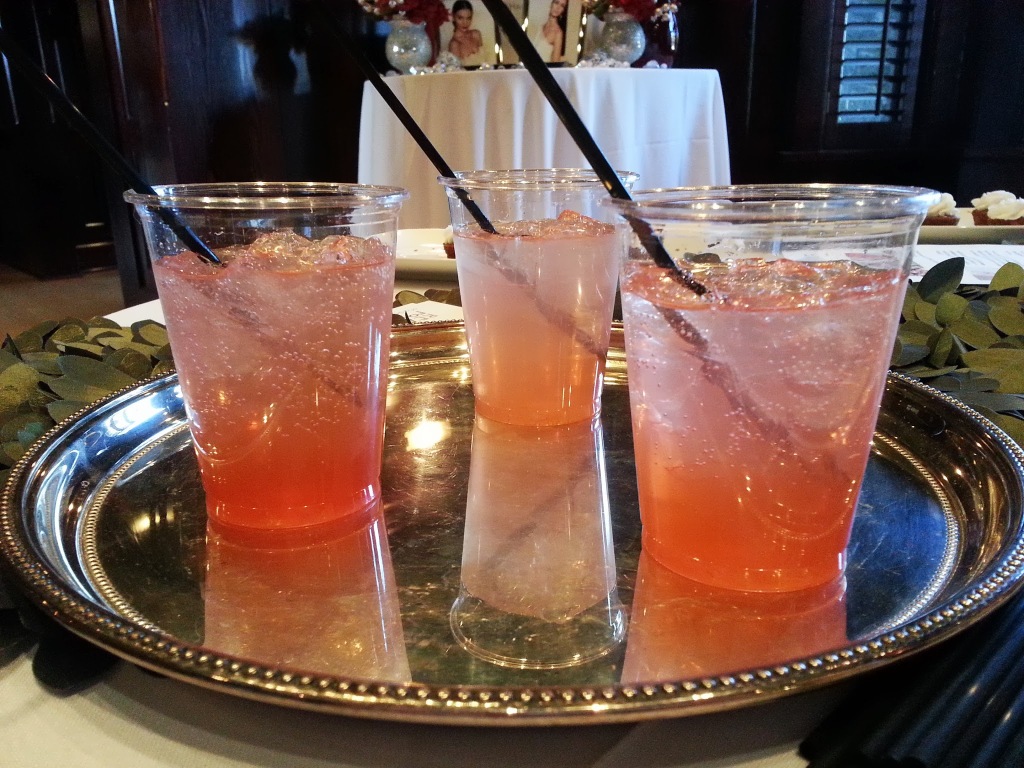
Strawberry Shrub (photo: Janice Mansfield)
Until recently with the renaissance of pre-prohibition cocktails, there were very few options for bitters on the shelves. Most bartenders only hand Angostura bitters to choose from which came with its own limited flavour profile. Because necessity is the mother of invention, Mansfield got to work making her own bitters.
“I was participating in online cocktail hacking sites,” she says. “Basically it was nerds who got together online every Thursday to hack cocktails so out of frustration I started making my own bitters.”
But there are people out there like Victoria Spirits, also based in Victoria, BC, making bitters, so why not just buy it from them? And this obviously goes for most things, why make sauerkraut, sausages, jam, pate, cheese and so on, when someone else, with likely more experience, is already doing it?
“It tastes better when you make it at home,” says Mansfield. “There are two groups of people: Those who like to experiment, who may do it once or twice to check it off their bucket list, but for the longer term will with have sought out someone who produces something of a quality they like, the other group is those who are doing it out of cost now a days.”
The reality of it is, you can make bread or jam – the really good stuff—for a lot cheaper than you can buy it in the store, but as Mansfield says, there are a lot of people who just think there isn’t enough time, and that’s where a need for Mansfield’s skill come in.
“There is a sub-group of people who like to be geeky about their food and drink,” she says. “The fact that people do it at home has a positive affect on the market, because it helps educate people’s palates and brings an awareness of that level of quality.
“For something like cocktails for example, the fact that people are doing it at home brings a certain level of demand into the market place, and having had a really good old fashioned at home, means you’ll be less satisfied to go out and have a crappy one.”
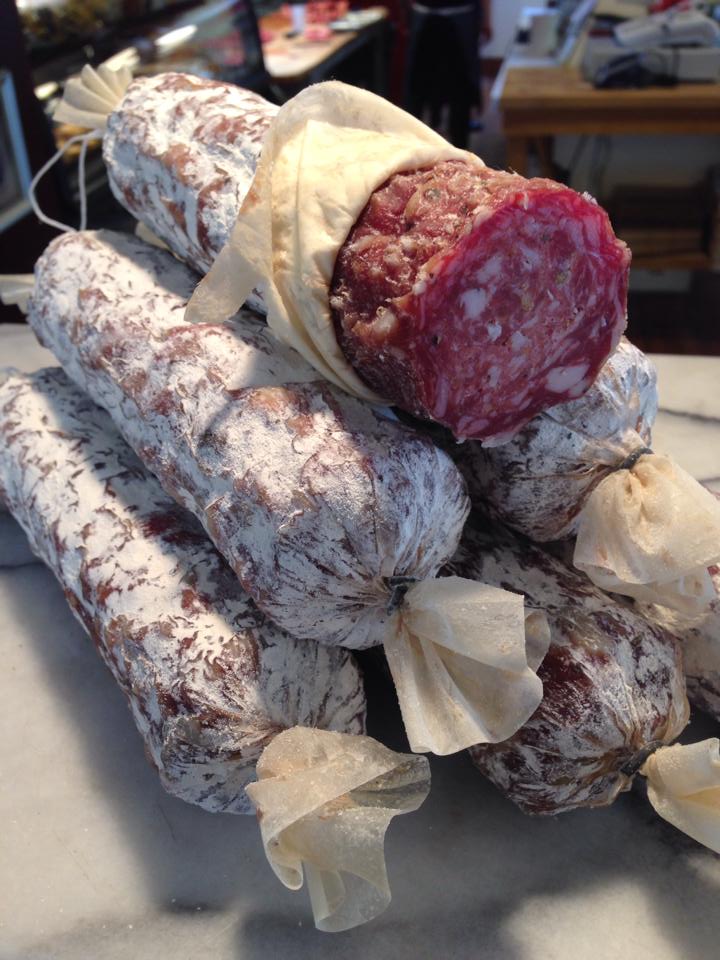
The Whole Beast’s Venetian salami (photo: The Whole Beast)
Even though necessity (in addition to creativity and passion) has spawned a large part of the movement towards DIY food, concern about the integrity of the food we buy at the grocery store is also driving a lot of people to make more and more stuff at home.
“They are doing it themselves. because of the lack of choice for healthy good, clean, fair food in most grocery stores,” says chef Cory Pelan, co-owner of Victoria’s The Whole Beast Artisan Salumeria. “The vast majority of places that sell food don’t sell great food. They are selling manufactured, highly-processed food and I’m speaking from a processed meat standpoint, it’s really hard to find stuff, and it’s hard to find people who know what they are selling you as well. People are forced to do-it-themselves and are finding it really enjoyable.”
The Whole Beast specializes in beautiful handmade meat products including sausage and prosciutto, and Pelan has also been teaching both formally and over the counter, how people can do it themselves, at home.
“I love taking about it so anyone who is interested, I will go on for hours if I have time,” he says. “If someone expresses interest it is exciting for me because I love talking about it, so I can geek out on meat preservation as long as I have a few minutes.”


No Comments