

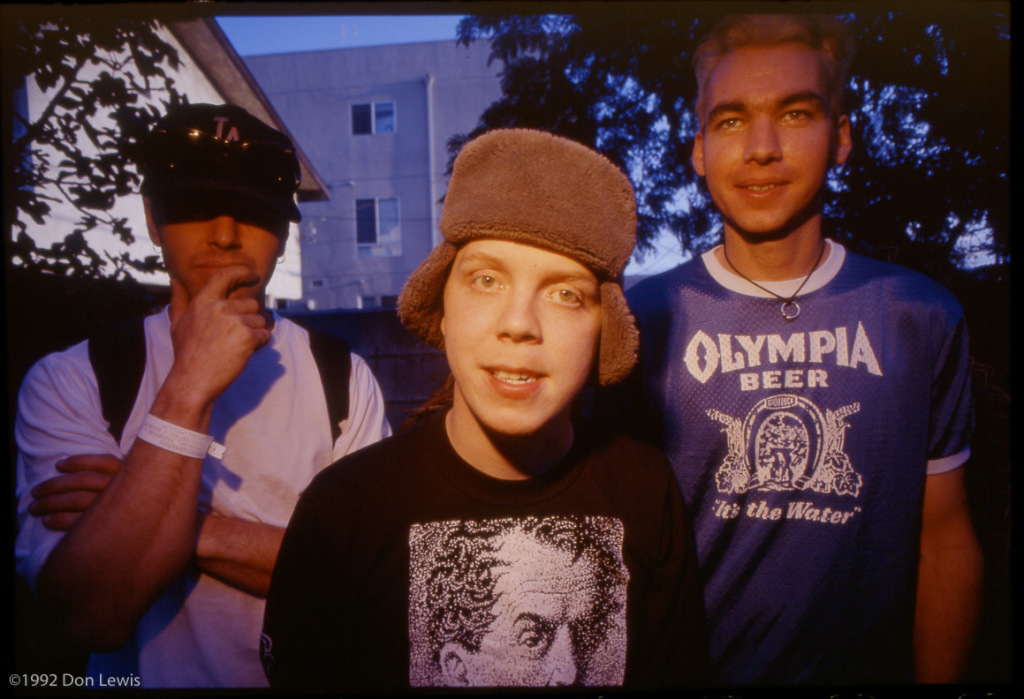
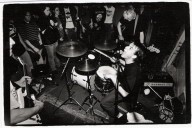
The early days of Jawbreaker (photo: Don Lewis/wilddonlewis.com)
Maybe it was us recently talking about 24-Hour Revenge Therapy for one of our Classic Platters that put a bug in me, or maybe this plan’s been in my head all along, but getting a chance to interview drummer Adam Pfahler about Jawbreaker was something I will definitely hold near and dear for a long time.
One of the most prominent and interesting melodic punk bands until 1996, when they sadly called it quits, Jawbreaker, for many, were the punk band at the time with the most artistic, poetic teeth. Musically expansive and lyrically sharp, Jawbreaker released four stellar albums: Unfun (1990), Bivouac (1992), 24-Hour Revenge Therapy (1994) and Dear You (1995), all them standing on their own as what Pfahler refers to as “snapshots in time.”
Now, almost two decades after their breakup the band, has a whole new generation of fans who never had a chance to hear or see the band during their heyday (Pfahler jokes that some weren’t even born when the band was around). Through a series of album reissues on the band’s own Blackball Records, run by Pfahler with input from guitarist/vocalist Blake Schwarzenbach and bassist Chris Bauermeister, Jawbreaker’s legacy has thankfully carried on.
Rumours of the band’s reunion began almost immediately after they broke up and have continued for nearly 20 years, which proves how much fans of this band still care about them. And that’s where we start…
It’s been almost 20 years since you broke up. What’s it been like to be around this band that’s got such a huge following, and people still very much care about it, but it’s been a couple of decades since you were actually a band?
Pfahler: Yeah… Jesus. It confounds me, really. You want to think that what you do is going to last for a little bit, but I don’t think anyone expected it to take off and become what it’s become. It’s amazing. We’re definitely more popular now then when we were active, so it’s been a trip. We’re grateful, obviously, and it’s afforded us more exposure for other things that we’ve been doing, and that’s great. But no one really figured on this, so when we hear from people all of these years later we’re super grateful. But, yeah, it’s wild.
There’s a lot of Jawbreaker… I don’t want to say worship, but there’s all of this stuff online. How does it make you feel to know that there’s this groundswell out there of all of these people that are still so much into this band?
Well, I think it would be different if it was only people looking back, and we’ve got people who are fans of ours that have grown up with us, and that’s great, but also there are so many people who maybe weren’t even born when we were playing. [Laughs] There are a lot of young people who are really into the band, so that’s really cool, too. My kids have friends at school that know my band, and that’s kind of rad.
Going back to the beginning, when did you first meet Blake and Chris and how did you first connect with each other?
I met Blake in high school in Los Angeles. I think I met him on the first day of school when I transferred in. I was going to public school and I was missing a lot, so I ended up transferring over to Crossroads School in Santa Monica, which was this small, private school centered around the arts. So I met Blake, god, it must have been 1982 or something. We hit it off and started playing music pretty soon after that. Later on, when we went on to college, that’s where we met Chris. We ended up meeting him in New York City, both Blake and I had transferred to New York University. We used to see Chris around; he had a very distinct look. He had orange dreads and wore a leather jacket with all these different band names painted on the back of it. We just decided to start a band with him while we were away in New York.
So at what point did you guys settle in the Bay Area?
We didn’t start as Jawbreaker back east; we were called a bunch of other things and we were constantly looking for a singer, because Blake didn’t have his singing legs yet. We had a couple of different guys and a couple of different names and we started making demos when we would go back home for summer break, or holiday break or whatever. We would reconvene in LA. And we’d get Chris out there. So we finally figured out that we should be a three-piece in about 1988. We took a year off school to live in LA and try to be a band, and write songs and play them as much as we possibly could. We ended up writing a bunch of songs and making some 7-inches, and recording and giving our songs out to compilations and split 7-inches. And we started touring then, too. It was only later, after those guys went back to school in New York and finished their degrees, that we decided to really make a go of it, and we all agreed that San Francisco was the place. It was compromise between New York and LA. Those guys were done with New York and I wanted to leave LA, so we decided to go to the Bay Area where we always had great success on the tours we would do, and some of the labels we had given songs to were from San Francisco, and there was a great scene there already happening. The pay-to-play thing was happening in Los Angeles, and we said, “Fuck it, we’ll go to San Francisco.” So we’re known for being a San Francisco band, because we put out three of our four studio albums from there, but really the band was kind of born in New York and then raised in Los Angeles, and then we eventually settled in the Bay Area. We still have a lot of people that support us in those two places, New York and Los Angeles.
I find it interesting that when you talk about Jawbreaker, you’re still talking about the band in the present tense. It’s not like you’re talking about something that happened 20 years ago…
Right.
But the band’s been your thing all along, hasn’t it? And it obviously is with the other guys as well, but with Blackball Records, you’re the guy from the band that’s carrying the torch for this thing.
Yeah, I’ve definitely been given a blessing and a curse. It’s a lot of work, but it’s worth it for me to keep us out there, by reissuing the records, and creating the websites and the social media stuff. It’s what I do, and I live with it every day. I’m constantly doing it, and everything comes over my desk. But you’re right, and I think I kind of vacillate between the present and past tense with this group. And also I’m still so in touch with Blake and Chris and it’s very much a part of all of us. There’s a lot of stuff going on with the band, like the reissues, and there’s things to do, and there’s artwork to go over, and it’s very much in the present tense. I just did two art shows where I brought the original 24-Hour Revenge Therapy artwork and told some stories about the making of it; so there’s been stuff to do. It’s funny; we’re more popular now, which makes us more busy, and now that we have all of the catalog there’s always something to do. And because I’m the keeper of our legacy, it just keeps trucking.
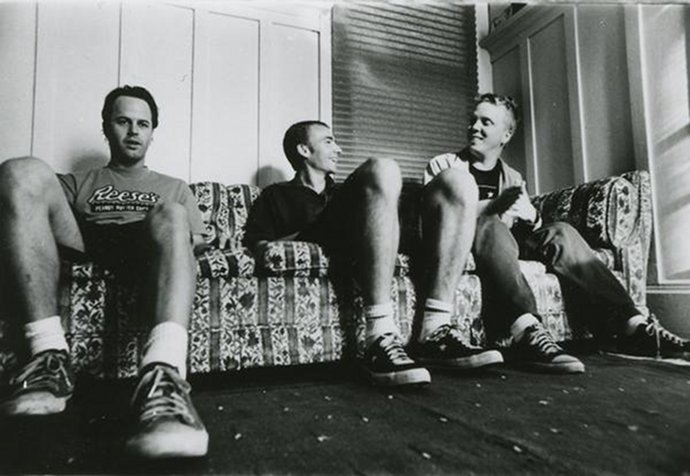
Did you guys initially have a conversation about who was going to take care of all of this stuff when the band was done?
No, it sort of happened naturally. It started when I realized that Geffen had taken our last record, Dear You, out of print and they never repressed it, so it was unavailable. I thought that was a shame, we all did, because we were all really proud of that record, so I ended up licensing our own record back from Geffen and putting it out on our label, Blackball Records, which had been laying dormant for years. We put one 7-inch out, and that was kind of the joke, that this label’s been going for 25 years and yet we have just a handful of releases that are mostly ours. So it started back then, when I was trying to keep us out there, because I thought it was important that this band didn’t just disappear, and just wither and die. I thought Dear You was a great record and it needed to be heard, and I knew people were really into it because I would see that it was being sold and traded, so I was like, “Fuck it, we should put this out for real.” And as the 20-year benchmarks would come up with the other releases, I would just get the original tapes and artwork and clean up whatever loose ends there were, and put them out there. And it’s become a lot more work than I thought it would be, honestly. I actually needed to get an intern to help me with some of this shit, because I didn’t know there would be so many people who actively cared about this group.
When it comes to the four albums, how do you see the progression? Every album had a very big jump, but how do you guys feel about the trajectory of the four albums?
Well, they definitely all indicate where we were at the time, so it feels very natural, even though they all sound so different. But they are just snapshots, really. Unfun was our straight-up fast and hard album, and there’s not a whole lot of dynamics in it. It’s the most punk rock of our albums, probably. But you could hear a little foreshadowing of what we might get into later, with the samples and the long instrumental passages and stuff. But when we moved to San Francisco, definitely Bivouac was way more ambitious, and we spent a lot more time in the studio, and it was us stressing out a little bit more, and slowing down some. And I think that had to do with us being in new place and trying to put down stakes, you know? Kind of getting dug in. We weren’t really thinking about it in terms of a career, or a sound; it was just reflective of what we were listening to at the time, and what we were going through with the writing of it. We all wrote songs on that record. And by the time you get to 24-Hour Revenge Therapy, we’d been playing a lot and we’d been touring constantly, and we were in the studio, and in our practice space a couple times a week, so it was a different, tight, economical record, in every sense. And I also think it’s the one record that sounds the most like us playing live, and that has everything to do with Steve Albini, for sure, and Billy Anderson, who recorded a couple of those songs. And then with Dear You, we got signed and we got a big budget to go and record with, and we’d never done it like that before, so we were like, “Let’s try it like this and see what happens when Blake really digs in and tries to sing this thing.” And we got some really amazing guitar sounds to go with it. So, at the time, we weren’t purposefully going, “Let’s make this record sound different.” It’s just sort of happened naturally.
Like you said, a snapshot in time…
Yeah, for sure. We never really thought we fully came across in recordings, anyway. We always just thought of ourselves as a good live band. We were like, “Shit, you should come see us, because it’s kind of a different thing.” And I’m sure some of that might come across in old videos and things, but it’s hard to capture if you see some lousy sounding recording on some shaky camera on YouTube; it’s a totally different thing. But we always just wanted to be a good live band, because that was our bread and butter, really, just going out and playing. I mean, we sold a good amount of records, but I think you’d be surprised… we didn’t really sell too many records. We just developed this crazy cult following that continues to this day. We’re just one of those bands who has this core group of people out there and we’re their best-kept secret or something.
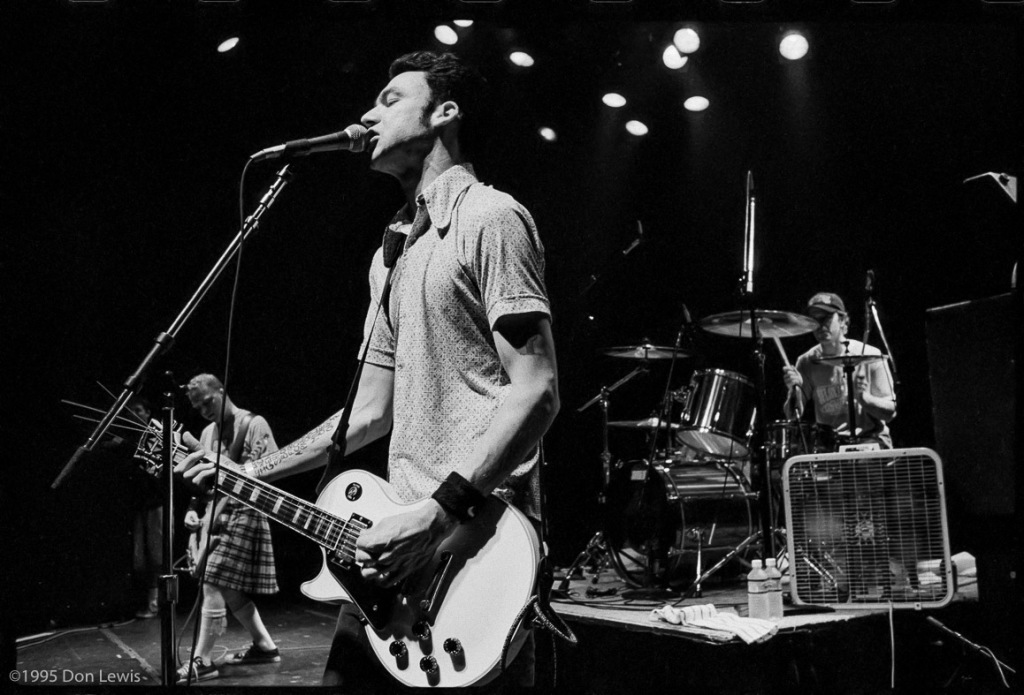
Jawbreaker in 1995 (photo: Don Lewis/wilddonlewis.com)
Do you remember how you felt about the drop off after Dear You came out? Because a lot of your longtime fans… not abandoned you, but felt like you weren’t their band anymore. But you also fell into this weird pocket where you didn’t really have a fan base.
Right. Yeah, I remember being pissed about it, because we took a lot of flack and it became very political, but it was never a political thing to us. I was surprised at how many people picked up on that, including the mainstream press that were covering us. So we were getting it from all sides. But I also remember honestly not giving a shit, and I’m not sure if I could do it again that I’d do it any differently. I think I’d probably do it just the same, and that may sound stubborn, but I remember we were very resolved. We were like, “We’re going to make this record and it’s going to be good,” and we did it in a very insular way. We didn’t have people breathing down our necks and making us change anything, or suggesting what the sound was going to be like, and when we were done we thought we had made a great record and we looked at each other like, “Well, either they’re going to get it or they’re not going to get it.” And clearly they didn’t get it. But years later they got it, so it was very validating to have it get so popular later. And it was a little bit like, “Where the fuck were you guys when we needed you?”
Why did you guys break up? What would you say is the biggest reason why Jawbreaker ended?
We broke up in the Summer of ’96, and we’d been playing with Chris since the Winter of ’86, so we’d been together a lot of years. We’d get under each other’s skin on tour; we were in the van a lot together. We never did do a bus tour; we’d never fly to shows. We drove in a Ford E-350 van with one roadie through our entire “career,” and it didn’t help that we put a major label record out that the label immediately gave up on, and then we spent the next year trying to right that. So I think we were just tired. I think Chris wanted to get out and do something else; I think Blake wanted to move back east. So it was a pretty easy decision to make. But shit happens. I’ve been very vocal about that decision to break up, that I didn’t think it was necessary, and I was the one that was pushing against it the most, probably. I just thought that we needed time to go and figure our shit out, and then maybe regroup and come back to it. But it didn’t work out that way, obviously.
Was there finality to it at the time?
Yeah, we sat down and decided, “That’s it; we’re going to call it quits.” We called our manager and said, “We’re breaking up,” and we had him do a press release, well, saying it was a press release wasn’t really true, because there weren’t that many people paying attention. But we let the label know and got out of our contract with the label, because we had signed with them for two more records. So, yeah, we all sat down at my house and called it quits, and everyone broke off and went their separate ways. It wasn’t like we were fucking screaming at each other; it was just sort of like, “We had a good run, so let’s just call it.”
And then the reunion rumours started pretty much immediately, and they’ve been going on for almost 20 years. How has it been to deal with constantly being asked if you’re going to get back together?
Yeah, it happens every year. It’s funny that we became one of those bands that people just keep coming after for a reunion. And I guess it makes sense, because we didn’t stick around, you know? Had we stuck around another five or 10 years, I don’t think this would be happening. I don’t know; who’s to say? But, yeah, it’s strange, and because I’m the guy running the label and taking care of the band business, all of those offers come through me and I have to send them out to the other dudes. And these offers just get crazier and crazier every year.
Can you see yourselves getting back together?
Because I live with this band, it doesn’t seem like it would be much of a stretch for me. I’m just constantly dealing with this group already, and because I still play drums, and because I know Chris and Blake still play, it doesn’t seem like it would be an impossibility. It just really has more to do with where everyone’s heads are at, and where they are with their lives, and jobs, and school, and family. Because nothing like that could be undertaken without serious consideration. We would never be aloof and do it half-assed at all. We’re not going to phone it in and just learn 10 songs; that’s not going to happen and that’s not how we do things. We would take it really seriously if we ever did it, so that involves time and a lot of logistical shit. So I don’t hold my breath that that’s going to happen, but there’s nothing physical stopping us. Like, we’re not old men. I don’t see us not doing it because we have arthritis or something. We could easily do it, but it would just be a commitment. It would be a year of, “We should do this,” and I don’t see that happening, really.
How close have you guys gotten to getting back together over the years?
Pretty close. We’ve talked about it, but it just didn’t synch up and make sense. And we played together when they filmed us for the movie. Someone’s making a Jawbreaker documentary right now and we got together and did all of our interviews together in the studio, and then we played. And so I know we can do it; it’s not like this forbidden thing like, “I’m never going to stand in the same room with this guy again” or something. Just for the hell of it, we were like, “Man, do you think we could play that song?” and we just tried the hardest songs that we had, just to see if we could still do it.
What songs did you play, and how was it?
We played “Bivouac,” “Parabola” and “Condition Oakland.” And it sounded great, I thought. You have chemistry with certain people, so it’s not very hard. We played together a lot of years, and all of that shit that you hear people talk about… that unspoken stuff that you have with certain people in a band; we definitely have that. There’s truth to that stuff; everyone plays their part and it’s very easy with certain people. So it was like that. And it was weird because it had been 15 years and we just plugged in without practicing and got through it. And it sounded fucking massive to me; I thought it sounded great.
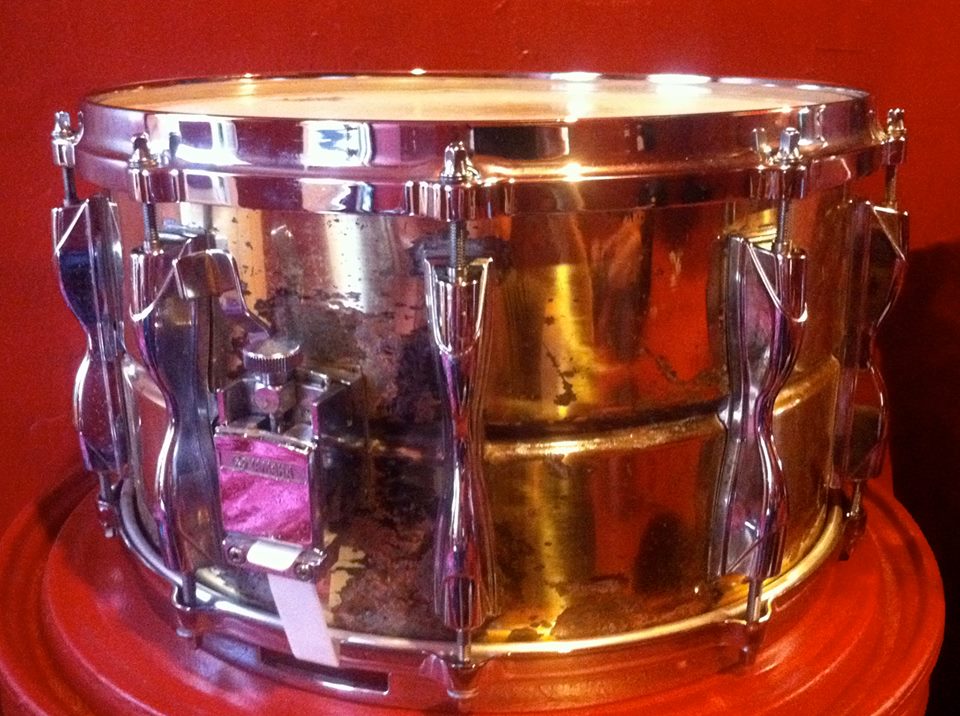
The beat up snare that Adam Pfahler used in Jawbreaker.
After all is said and done, whether you’re able to do the band again or not, what do you want people to remember about Jawbreaker?
It’s funny; it means so much to the people who reach out to me, and I’m sure Blake and Chris would say the same thing. It’s a very important band to people that they have great memories around. And that’s expressed to me on a pretty regular basis, and this is a group of people that aren’t as far-reaching in numbers as you would think, but we hear from them and it’s always really cool. Other bands will cover our music, and I love hearing that stuff. And there’s even been tribute songs written about our band that are incredible to hear, and they’re very humbling. Everyone’s got their own thing about this band. We were around for a relatively short time, but obviously something really struck a chord with people that has given Jawbreaker legs this many years later. I think it has a lot to do with the writing, I think it has a lot to do with the stories that are told that people are relating to, and I’d like to think it’s the music as well. But it really hit a nerve. And people will roll up to me and pull up their sleeve and they’ve got a tattoo with one of our song’s lyrics on it or something, and I usually ask them, “Do you regret that one?” and they don’t. [Laughs]
When Blake first came to you with the lyrics to “Boxcar,” what did you guys say to him?
He played us “Boxcar” on a van ride coming back over the Bay Bridge from a house show we had played. He played us that song as we were coming over the bridge and everyone in the van knew that people were going to go apeshit for that song, and it was going to be a really great, catchy song. I was like, “Oh, fuck, there’s the third song on our next record.” It was that apparent. If you were in that van with us, you would have thought that exact same thing; it was just very immediate and catchy, and it’s like a two-minute song or something. At the time when that one was written, Blake was writing the lion’s share of the songs and they were coming straight out of his journals, and his batting average at the time was really incredible. He was knocking them out on a regular basis; it was a really prolific time for him. They were just great songs and we knew they were great. It was just a matter of getting them down and arranging them. There weren’t a whole lot of songs where we would look at Blake and go, “Yeah, dude… that’s no good. I can’t get behind that.” [Laughs] The songs were really personal to him, but they were also personal to us, because he was writing about all of our experiences, and taking everything into account.
Jawbreaker’s reissues are available on Blackball Records.





1 Comment
Great read. I saw jawbreaker play at Gilman in 1993 for the first time as a junior in high school and I realize now how special that was. They, Samiam, and green day were the soundtrack to my youth and besides being rock stars. They were just guys in the city making music and I wanted to be just like Blake! When a friend of ours became the drummer for J Church, I even got to check out where jawbreaker practiced! Because they shared the same place.