

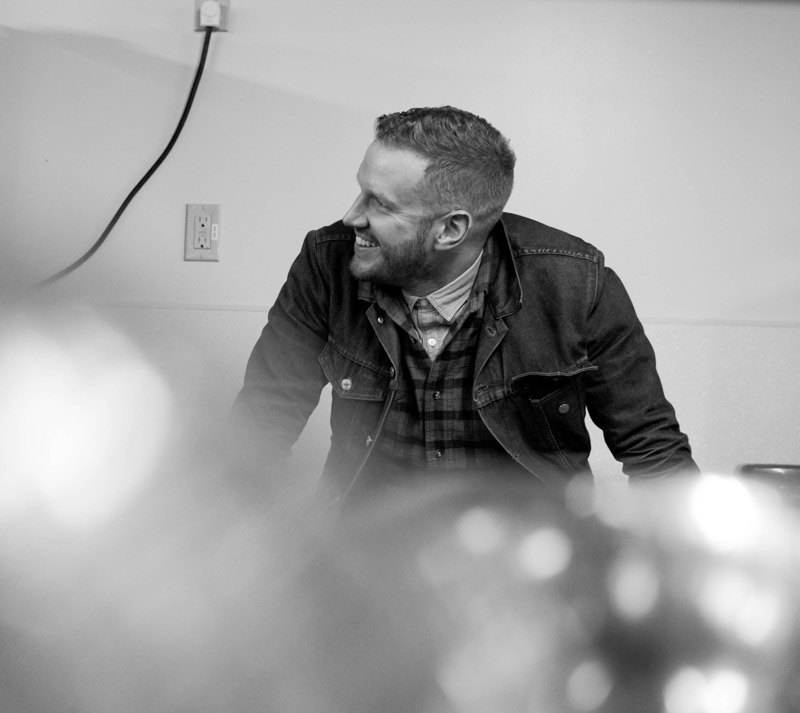
Sean Hoard, Teardrop Lounge bartender and The Commissary owner (photo: Talia Kleinplatz)
Interview by Megan Cole
When most people think of bartenders, they think of flashy bartenders like Tom Cruise in Cocktail or a butler-type character from Casablanca, but the recent renaissance in cocktail culture has re-introduced the bartender as an artist who also plays host, cook and part-time therapist. In the world of food and beverage, bartenders are given the same praise and respect as great chefs. As one of North America’s hubs for all things eating and drinking, Portland, Oregon has embraced the bartending revival and made it part of what it means to be from PDX. With one of the biggest food and drink festivals, Feast Portland, on the horizon, we talked to Sean Hoard, bartender at Teardrop Lounge and co-owner of cocktail ingredient company The Commissary, about what it means to be a bartender in Portland, and how it compares to starting his career in New York.
How long have you been bartending now?
Sean Hoard: I started bartending eight years ago.
What drew you to that business?
I studied music business in school and wrote a business plan for a music venue. The advisers that were helping in the class with the business plans said the only way you make money at a music venue is by selling alcohol, and I never had a service-industry job. A friend of mine who was in the class was bartending at this rad little cocktail bar, and recommended me for a bar-backing job that I treated kind of like an internship. I realized pretty quickly that I liked the service industry more than the entertainment industry. By the time I graduated from school at New York University I liked the service industry so much that I kept bartending full-time.
What did you like so much about it?
For me, and it’s a little bit cheesy, but you take care of your own in the service industry, and if I go eat or drink and know the bartender, I’m going to try and be the best guest in the place. And even if I don’t know them, it’s this empathy I didn’t feel at all in the entertainment industry. Everybody was out for themselves in a very cliched and played out way now, but as a 21-year-old, when all you want to do is work at Def Jam and be the next Rick Rubin, to see that a lot of people were super self-motivated, it was nice to be bar-back at this little cocktail bar and be treated like a king when I went to other rad cocktail bars, because they knew my boss and knew where I worked. It was a nice change of pace.
It seems like as soon as you start working in the service industry, it’s like you’ve joined a club in a way.
Yeah. I hate that though, because I feel like guests that aren’t in the service industry are out of “the club,” and I think that we have to work really hard to make them feel part of that club, and feel just as special as a co-worker of mine who comes in on his or her night off. But I do feel like there is a certain level of empathy, where I know what a 12-hour shift is like and someone breaks glass in your well and you are five deep, I know what that feels like, so I try to relate as much as I can. I do like that aspect of it. Because the service industry is so interactive, and you get to talk to so many people a night, you’re a lot more onstage than a lot of other professions.
We all have that romantic view of a bartender having the role of a therapist. Have you found that in your experience behind the bar?
Yeah, absolutely, and I think the good teachers teach that. I was lucky to have guys like Jim Meehan, Daniel Shoemaker and Jeffery Morgenthaler, who are all dear friends of mine now, teach me that it’s so much more than the drink you’re making. They all make great cocktails, but there’s this really old bartenders book called Harry Johnson’s Bartender’s Manual, and what it says holds true even more today, saying “read the newspaper,” “engage your guests,” “have clean fingernails,” you’re this host, and you have to be the coolest dude in the room and make everyone else feel like they’re the coolest people in the room. I think the men and women behind the bar who are doing it right are capable of making everyone who comes in feel special, for lack of a better word. That’s what I miss about not having a regular bartending job, you have upwards of 200 really great, completed transactions, where people are happy and really pleased. Now owning a company like The Commissary, I only get like one of those a day, if I’m lucky. There’s something incredibly satisfying about making people happy.
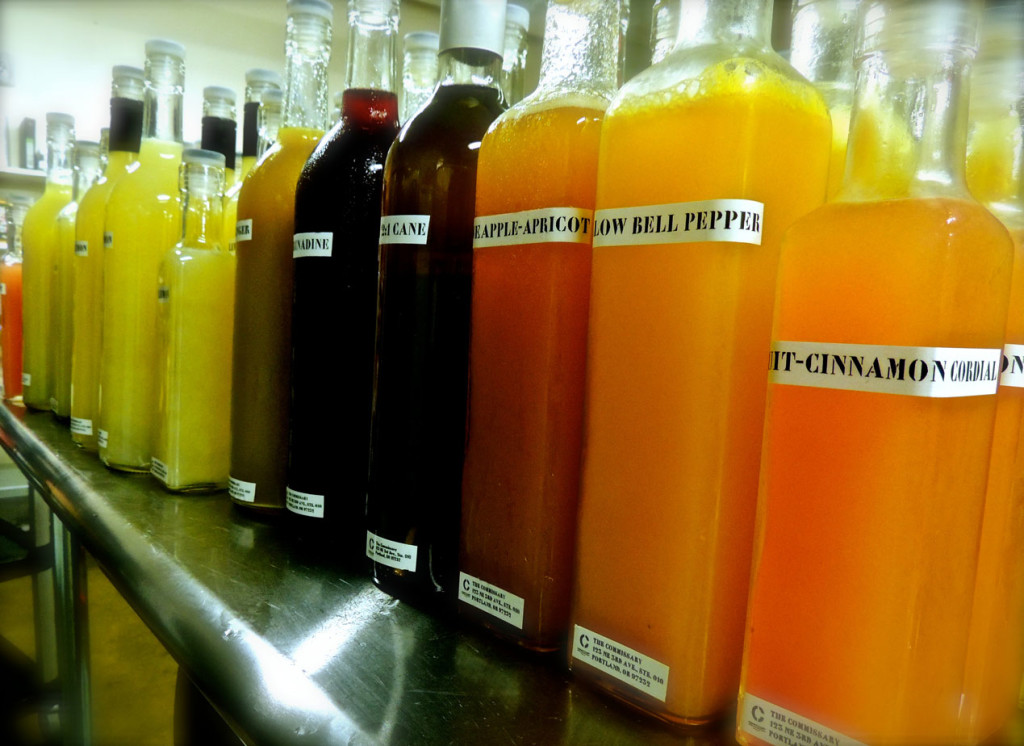
Juices and syrups made at The Commissary (photo: courtesy The Commissary)
I read that you started your bartending career in New York and moved backed to Portland. Have you noticed a difference between the two different bar cultures since you’ve moved back to Portland?
In New York, it was a very high level of execution. There were four-star restaurants and we were charging $15 a cocktail, so it was a serious, high-stakes situation, and in Portland it’s more laid back, but that’s not to say that the quality is any lower; it’s just that it’s a little bit more relaxed. That’s less so now that Portland has become aware of where it sits in the national and global food and beverage scene. I think Portland has tightened the screws a little bit, but I have to say here they do a good job of creating a culture and the bartenders really kind of band together. That does happen in New York, but because there are so many of them it’s hard to organize and that sort of thing. For example, here in Portland I was at a bar the other night and 100 percent of the cocktail sales goes to a fund that helps pay for bartenders who have been injured, and it compensates them for the tips that they’d lose. Walking into a bar and having that around is pretty exciting. The other thing in Portland is that the average guest is really educated, and not just picky, but knows a lot, and they will sit at the bar and order a Vieux Carre [a short, slow sipper that begins with equal parts of rye whiskey, Cognac, and sweet vermouth originating in New Orleans], but in New York that may not happen because you get so many tourists and people from different walks of life. In Portland, it’s like a hobby here, where instead of going to the movies you have dinner at Pigeon and have a cocktail at Teardrop. It was surprising coming from New York, where you could serve someone a Tom Collins and they would be really excited and surprised because it was served in a beautiful glass and was really balanced, but in Portland people make a Tom Collins for themselves at home.
In Portland, it seems like the food and drink culture is so ingrained, in not only how people go out, but also how they entertain at home, too.
Absolutely! I grew up in Portland, so I both love and hate it with a fervour that not many of my friends are capable of. We’re definitely not Tokyo, London, Paris, New York or San Francisco, but for the average Joe, we do pretty alright here. Like, my mom knows how to make an Old Fashioned, which is pretty cool. I do appreciate that about Portland because it allows you to take risks and have the company like the one that I have, and people can understand it and get excited about it.
I was talking to Chad Draizan from 50 Licks and he said that Portland is one of the only cities where you can pick the weirdest kind of hobby and make a job out of it.
That’s true, and I think the stereotype is that you make a part-time job out of it and then are like a part-time barista, but Chad is a great example of someone who did just that, and is doing really well. He’s a guy that I look up to as it being possible to be your own boss, and do your own thing.
Thanks to Portlandia, there are lots of stereotypes out there about Portland, but one of the common ones is the pride and fixation on local, which is something you guys are incorporating into your workshop for Feast. How has the farm-to-table concept impacted what you do in your work?
It’s held me accountable in a great way. People ask where things come from and it’s hard. One of the many horrible byproducts of climate change is the produce, and where is it going to come from. What’s cool about being here with the locavore culture is, as a small business, people really look to support small businesses where they can see an impact. I didn’t get that before I started The Commissary. I was kind of a dick and I didn’t by local vodka and whatever, and I bought the best of whatever it was, and screw the bottle of Portland gin that costs $20 more. But when you start a company, you see people support you because you’re their neighbour, or you live down the street, or you’re this punk, 27-year-old kid that has the guts to start a company. Now I find myself going to bars and restaurants where I know the owner, and I just want to support them, and I throw my weight behind products because I know who makes them and how it’s made, and it doesn’t matter how much it costs or what the bottle looks like, I know the product is good, and I know the person who’s making it.
We all know great spirits and ingredients are necessary for a memorable cocktail, but because of your music background, I’m sure music is important in the bar culture.
It’s incredibly important. It creates an atmosphere for people to enjoy whatever it is that you’re serving. If you’re in this quiet cocktail bar and someone is playing death metal super, super loud, you’re not going to be able to have a conversation with your date, or your mom. It impacts the way guests receive whatever it is you’re putting in front of them. You could be putting the best cocktail in the world in front of them and if the music isn’t right for the space, and the sound isn’t right for the space, they aren’t going to enjoy it, regardless of how much work or effort you put into that cocktail. For me, it’s fun and it’s creative. At Please Don’t Tell, where I worked in New York, we had free reign to put on a record, and guests would figure out when a bartender would work because they realized one guy would play more Pavement than another. It’s a fun element of it and, truthfully, I want to own a rock and roll bar in Paris. I love being a bartender and I love owning The Commissary, but like I would love to own an expat rock and roll bar in Paris and book bands like Spoon after they play a big arena to do a small set. That’s the dream.
Sean Hoard and his business partner, Daniel Shoemaker, will be teaching Farm to Cocktail Shaker: Creating Your Own Cocktail Ingredients with The Commissary at Feast Portland on Saturday, September 19.




No Comments