

By Greg Pratt and Jason Schreurs
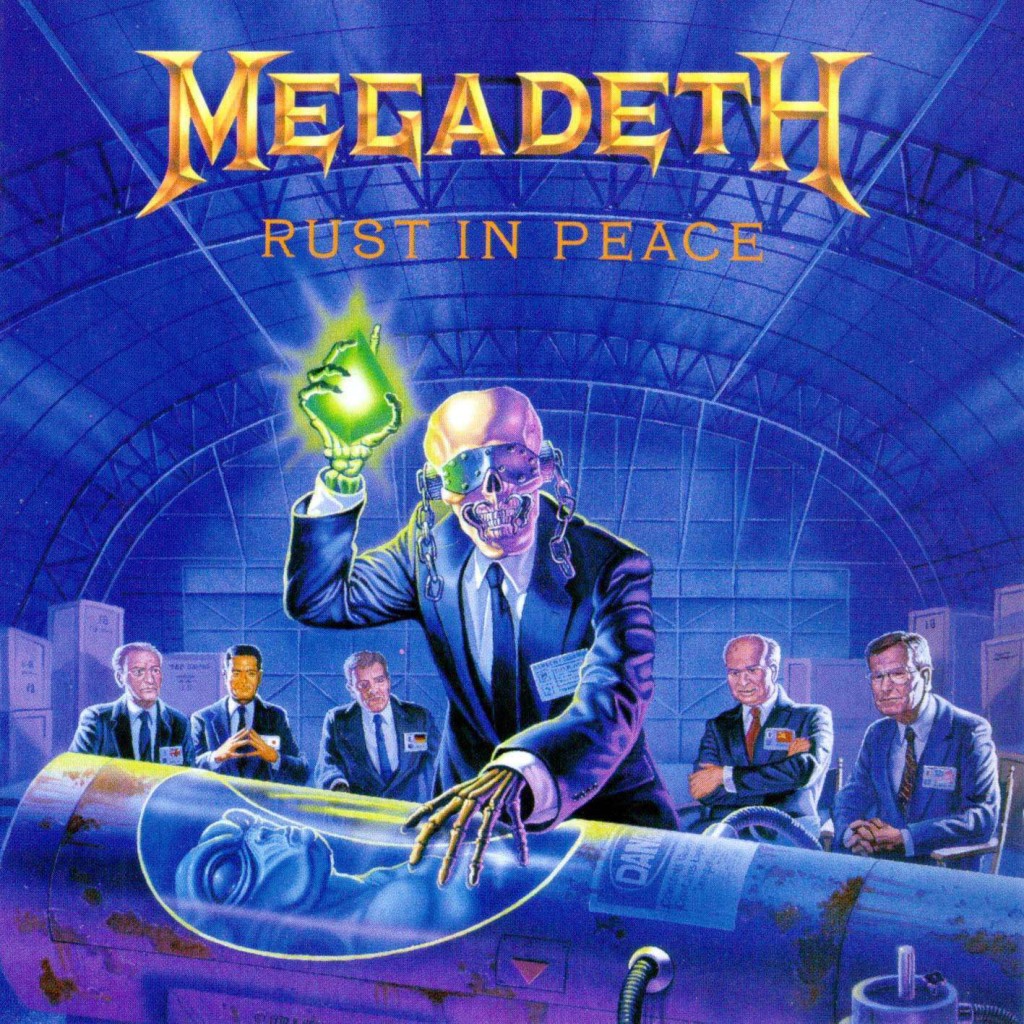
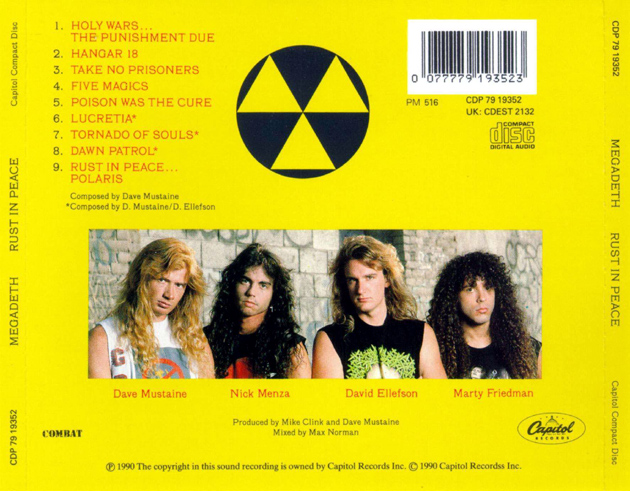
Sometimes it seems like Megadeth will never live down the incredible pressure of putting out Rust in Peace, which is what happens when a bunch of young pups release a genre cornerstone early in their lives, and a mere four albums in to their musical career. So it went in 1990, when Megadeth leader Dave Mustaine and bassist Dave Ellefson Jr. got a couple new dudes in to the ‘deth fold (guitarist Marty Friedman and drummer Nick Menza), rehearsed like madmen and, fuelled on pure ambition, youthful energy, and, well, whatever else Megadeth circa:1990 were fuelled on, created this monster of an album.
It’s the one Megadeth album that we still reach for as older men with bum hips and pepper salting our hair, and it’s probably the one we’ll reach for as we’re nearing our dying day, wanting to remember one last time just how perfect thrash metal could be. Not a word of exaggeration: Megadeth’s Rust in Peace is perfect, and is definitely worthy of becoming a Classic Platter.
Jason: Okay, where do we start with this album? Can we agree that Rust in Peace is the best Megadeth album?
Greg: Yeah, I think I’m finally ready to have that one written down; that it’s the best Megadeth album. How about you? Is it your favourite?
Jason: It is. Over the years I’ve fooled myself into believing that Peace Sells… But Who’s Buying? is my favourite, or even Countdown to Extinction, but really Rust in Peace is my favourite one. It’s such a strange album and it’s so progressive musically. It was unlike anything that was coming out at that time. If I’m going to listen to Megadeth now, it’s the one I almost always put on.
Greg: Exactly. Me too. Over the years it’s always been between Rust in Peace and Countdown to Extinction, but I’ve definitely found in the past five years or so it’s almost exclusively been Rust. I never really put on Countdown anymore. Rust in Peace is an album that when I’m talking to non-metal people, it’s one of my go-to examples as to why I love metal, which says a lot.
Jason: It’s weird with Megadeth because, for the most part, they’re kind of a crappy band, let’s be honest. [Laughs] They’ve put out some awful albums that you and I have basically tried to defend, for who knows what reason? But really this album is why anyone would defend Megadeth. Their first two or three albums were good, but they never really hit their peak until they put out Rust in Peace, and then they never really got back to this after that. They just kind of plummeted from there.
Greg: Yeah, you and I have both been big-time Megadeth apologists over the years. My most famous one, which you’ll never let me live down, was defending The World Needs a Hero when it came out in 2000. I haven’t touched that album in over 10 years, so I have no idea why I was so excited about it back then. And then you, to your, um, credit, defending those later ones; those albums that I literally can’t recall the names of right now. Well, the last one, Super Collider, sucked, but the ones before it, where you were like, “Yeah, these are pretty good thrash albums,” but they’re just so forgettable. They were fine, but there was just no magic there at all.
Jason: And Rust in Peace was filled with magic. This is what’s considered to be the classic Megadeth lineup with Friedman and Menza coming in. Unless somehow they bring back all four of these members and they all have this rejuvenation, they’re never going to get back to this album. With a lot of bands you can put three or four of their albums from their repertoire and say, “These are their classic albums,” but really, when it boils down to it, I don’t think there are any other classic Megadeth albums. [Laughs] This is the only one.
Greg: I don’t know about that. I would consider Countdown to Extinction a classic, but it’s very different.
Jason: Yeah, and even Peace Sells…
Greg: And even So Far, So Good… So What is kind of half amazing. But Rust in Peace is the only one where it just makes my heart pound listening to it. It just makes me crazy; it’s just so good. I was reading an interview with Menza the other day and he was saying that they didn’t use a click track when they recorded the album; they just practiced it for like a year straight. So when they went in it was like just, “FUCK!” And moving ahead, they never did it like that again. And you can hear it. You can hear that intensity all over the album; it’s so awesome. The drumming is unbelievable. The production sound is perfect. It’s almost a perfect metal record.
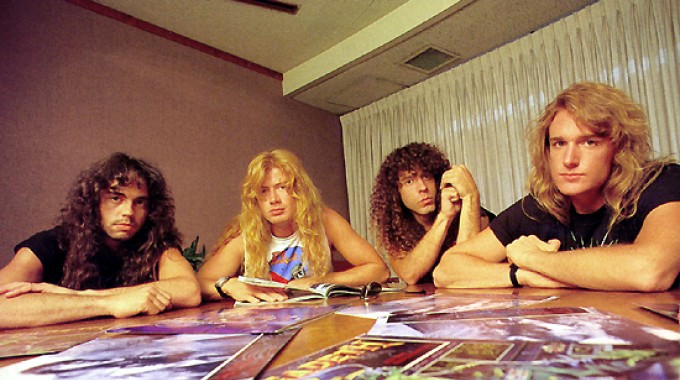
Jason: I actually saw them on this tour and live they were just as lights out. They were completely in sync and it seemed like this was the band that was going to take over metal. And then whatever happened after that happened… Another interesting thing about the album is that it was said to be Mustaine’s answer to Metallica’s …And Justice for All, but really it’s a far superior album when you look at in hindsight: production-wise, it’s way better, and you’ve got nine songs in 40 minutes whereas Justice was just this overblown, over-inflated monster. Mustaine’s always been trying to chase Metallica and never quite catching up, but I think Rust in Peace was the one time where they peaked enough to overtake that whole in-the-shadows-of-Metallica thing. Then, of course, Metallica’s Black album overpowered Countdown when it came out, and that was the last of that. [Laughs] Both bands definitely made their strange decisions and had their lacklustre albums after that, but this was the one point in Mustaine’s career where, just maybe, he could have finally overtaken Metallica, but then the rest is history…
Greg: It’s funny; you can’t ever, ever have a conversation about Mustaine without it turning into this conversation about him chasing Metallica. Even now when we’re getting together to talk about how great Rust in Peace is, and then six minutes into the conversation we’re talking about Metallica. The guy will just never live it down. And it’s a goal of mine, and I’ve never interviewed Mustaine, but I would like to tell him, “Hey, relax. You made Rust in Peace. You don’t need to do anything else.” Because I feel like the guy is constantly in agony and I wish I could just meet him and tell him, “Don’t worry anymore, Dave. You made Rust in Peace. That’s more than anyone needs to do in metal.” [Laughs]
Jason: Exactly how many guitar solos are there on “Hangar 18”? Have you ever counted? There’s got to be, well, it’s called “Hangar 18,” maybe there are 18 guitar solos?
Greg: Maybe, yeah. [Laughs] That song is nuts; it’s just one solo after the next. I’m not sure if it’s a duelling solos thing or what?
Jason: Yeah, it is. It’s Friedman and Mustaine just going at it, back and forth like crazy men. The song is over five minutes long, but about halfway in it just stops from being a song, to just being crazy guitar solo duelling for the rest of it, which is awesome, but it’s also the second song on the album, so it’s super weird. You can tell that this is one of those albums you have to listen to front to back. You can’t put on “Hangar 18” without thinking, “What the hell just happened?”
Greg: Taking a look at the track listing, pretty much every one of these nine songs totally rules. “Dawn Patrol” is a bit goofy, of course, and I always end up getting into it, but I’m not sure why he’s talking like that in that song. And that song “Lucretia,” I was listening to that yesterday and I cringed, because Dave says, and bear with me while I sing these lyrics, but he sings, “My friends all say, ‘Dave, you’re mental anyway,’ hey!” And I just thought, “Oh no, this was the seed for that stupid song on Countdown where he’s talking to himself for the whole song!” [“Sweating Bullets.”] So that was sort of unfortunate. But some of the lesser-talked-about songs, like “Tornado of Souls” and “Take No Prisoners,” which is one that I really love; they’re just awesome!
Jason: The whole album is amazing and so, so good. You couldn’t knock any of it. Yeah, sure, “Dawn Patrol” is a bit goofy, but you can’t point to a bad song on this album. Even the last song, “Rust in Peace… Polaris,” it’s the perfect way to end the album. And then you’ve got the perfect opener, “Holy Wars… The Punishment Due,” and we see a pattern here with the …s. But the whole album was basically dreamed up by, we’ve got to assume, a crazy genius, right? This was written in 1989, or around there, and obviously Mustaine wasn’t in the best mental state at the time, and not exactly clean and sober either, to put it lightly. But it’s one of those albums that you could put on for anyone in the world, whether they are into punk or metal or jazz, and they’ll agree that it’s an amazing album.
Greg: I guess the one stumbling point for some people are Mustaine’s vocals, which are what they are. And there are times where I can’t stand listening to him sing, but on Rust in Peace it never bugs me. I think it totally fits the music on here.
Jason: He’s definitely an acquired taste, but this is the one where he got away with the annoying Mustaine snarl. This is definitely the high point for everyone in this band. I think it’s where Friedman put in his best guitar performance, Junior’s on fire on this album, and you already talked about the drumming…
Greg: You also touched on how short this album is, because it feels like this huge epic, but it’s 40 minutes long. It seems like this huge, life-changing, two-hour opus or something, but it’s short enough to fit on one LP. It’s amazing.
Jason: Do you think this is one of the top three thrash metal albums of all-time?
Greg: I do. Yeah. I would say, and oh god, Dave Mustaine is going to kill me, but I’d say Master of Puppets is number one, and Rust in Peace is number two. [Laughs] There we go again. Always the bridesmaid! But, fuck, to be right behind Master of Puppets is still pretty damn good.
Jason: For sure. I always have to go with Slayer’s Reign in Blood as number one, Master of Puppets number two, and then, I don’t know, I might have to put a Testament album number three [laughs], just to rub it in and twist the knife a little bit, and then Rust in Peace. I definitely think it’s in the top five. It’s funny, because when I was a kid I was always like, “No way, man! Peace Sells!” It was always about Peace Sells, and I would even defend So Far, So Good… So What! which is pretty much a horrible album. But as I matured, Rust in Peace became the one. And Megadeth might as well give up at this point. They might as well just stop making music because they’re not going to get back to even The World Needs a Hero quality. And they’ll never match the quality of Rust in Peace.
Greg: I can’t really blame Mustaine for keeping it going, but it’s hard as a Megadeth fan, and for someone that likes Rust in Peace as much as I do, to keep seeing these new Megadeth albums, and the lineup changes, and the drama… But, no matter what, try as he may, he can never fully soil Rust in Peace‘s reputation in my mind. I’ll enjoy it until the day I die.
Jason: Now I’m lost in this fucking Megadeth discography and I’m staring at this “Return to Hangar” song, which was on The World Needs a Hero, and thinking about how sad it was when I first heard that. It’s like Mustaine is trying to chase this immeasurable album that will never be matched; I don’t think anyone could ever put out an album as good as this now. It was so strange, and they talked about how the guys in the band had a jazz and prog background, and it just makes sense. You hear that all the time and listen to albums and think, “No, this is just metal.” But this album was almost a different style of metal altogether, almost a different style of music altogether. I always picture the 1990 lineup of Megadeth pulling up to some jazz club, setting up and playing one of these songs, and some old cronies in a smoky jazz bar just being stoked. And then the thrash metal fans kind of scratching their heads, then figuring it out and loving it. I remember seeing them on this tour with Judas Priest and Testament on Halloween night, and just watching them, and they were like aliens from a different planet. And it was rad, but at the time it was almost lost on me at the time how good they actually were.
Greg: And putting out an album this good only four albums into your career, and you’re all young guys; it’s that dilemma when the band puts out such an amazing work of art when they’re so young, how do you live the rest of your life? And maybe that’s part of Mustaine’s issue, Metallica stuff aside; he put out a few great albums super early on and he’s never been able to top it, or have a lineup that can top it.
Jason: How would you feel if Menza and Friedman came back and they announced they’d be putting out Rust in Peace 2?
Greg: Oh, I would not like that at all. [Laughs] To me, so much of it is a time and place thing, and a youthful naivety, and you just can’t recapture it. You can get those four dudes together, but it can’t be 1990 again. How would you feel about it?
Jason: I would be excited, briefly, and then I’d probably just go and listen to Rust in Peace. Megadeth are one of those bands that dated really fast and it’s too bad that they just didn’t just break up after Countdown and Mustaine could have done 10 The Mustaine Project albums or something, with all of his different players over the years. But it’s a rad album and it’s one of those ones where the more open you are to different styles of music, the more you can get into it. Back then it was almost lost on me, and now I just love it. It’s the only Megadeth album that really matters to me anymore. I’ll put on the other ones for shits and giggles, but it’s never as serious as it is when I throw on Rust in Peace.
Megadeth‘s Rust in Peace came out in 1990 on Capitol Records.





1 Comment
I thought Peace Sells But Who’s buying was an amazing album. definitely a classic. and So Far So Good So What had some awesome songs. Of course Rust in Peace is the best. but that’s like saying Slayers only classic album was Reign in Blood because it certainly was the best. but Countdown to Extinction will always be my favorite album over Rust in Peace.